
Last updated November 16, 2026
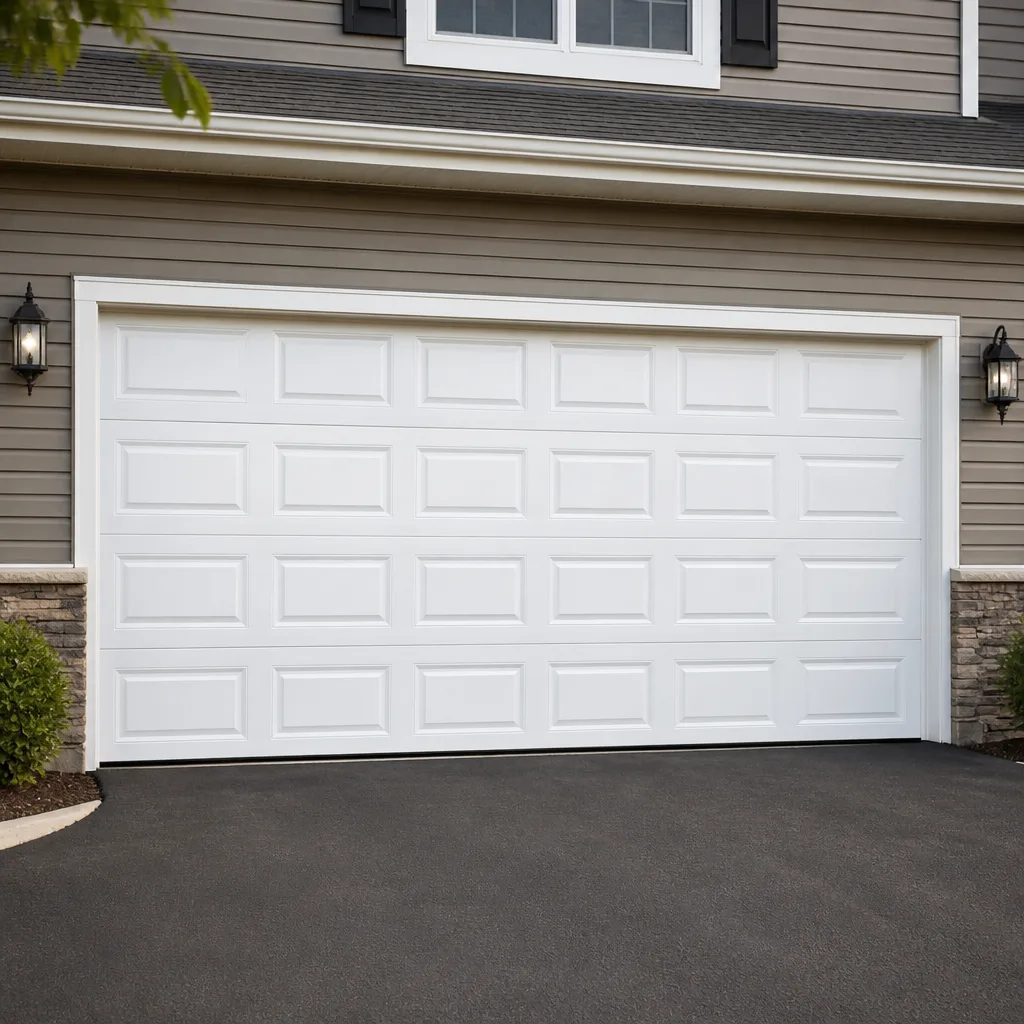 Raised-panel steel
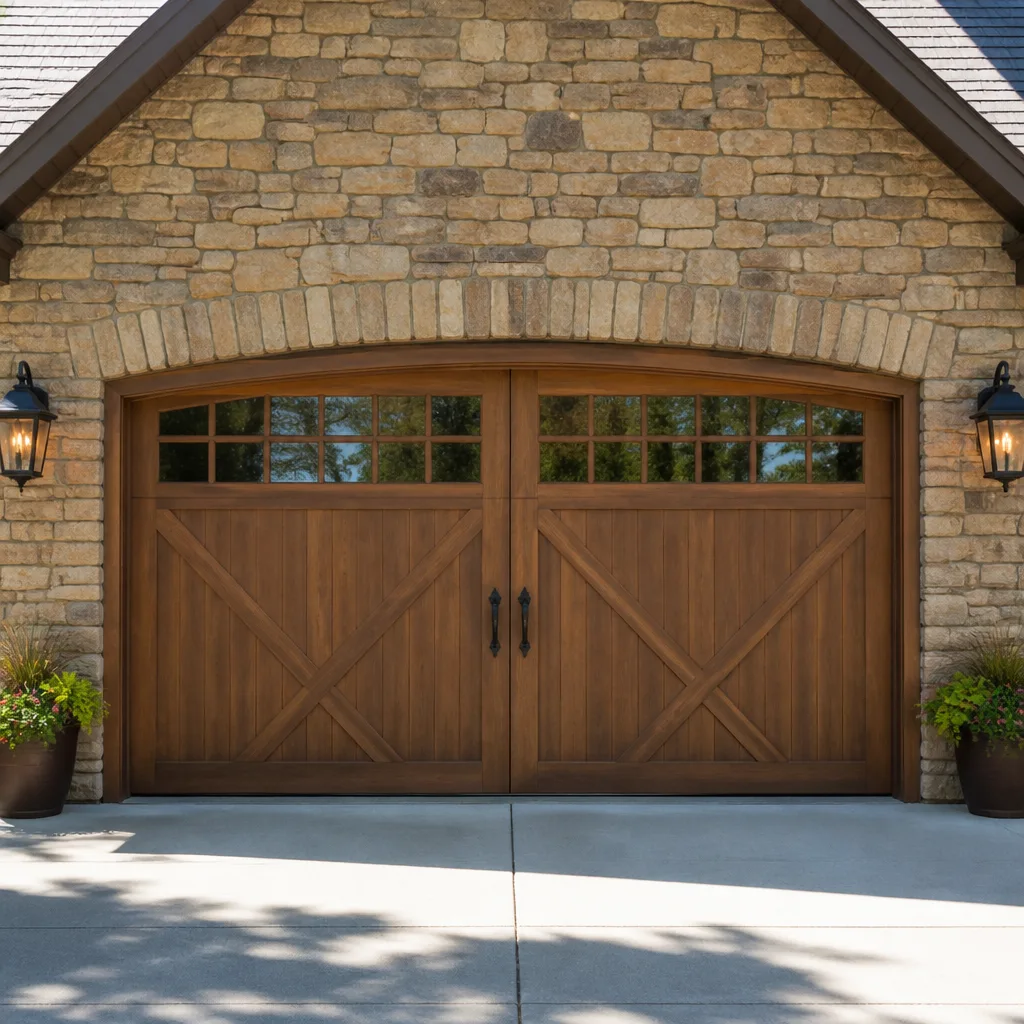 Carriage house
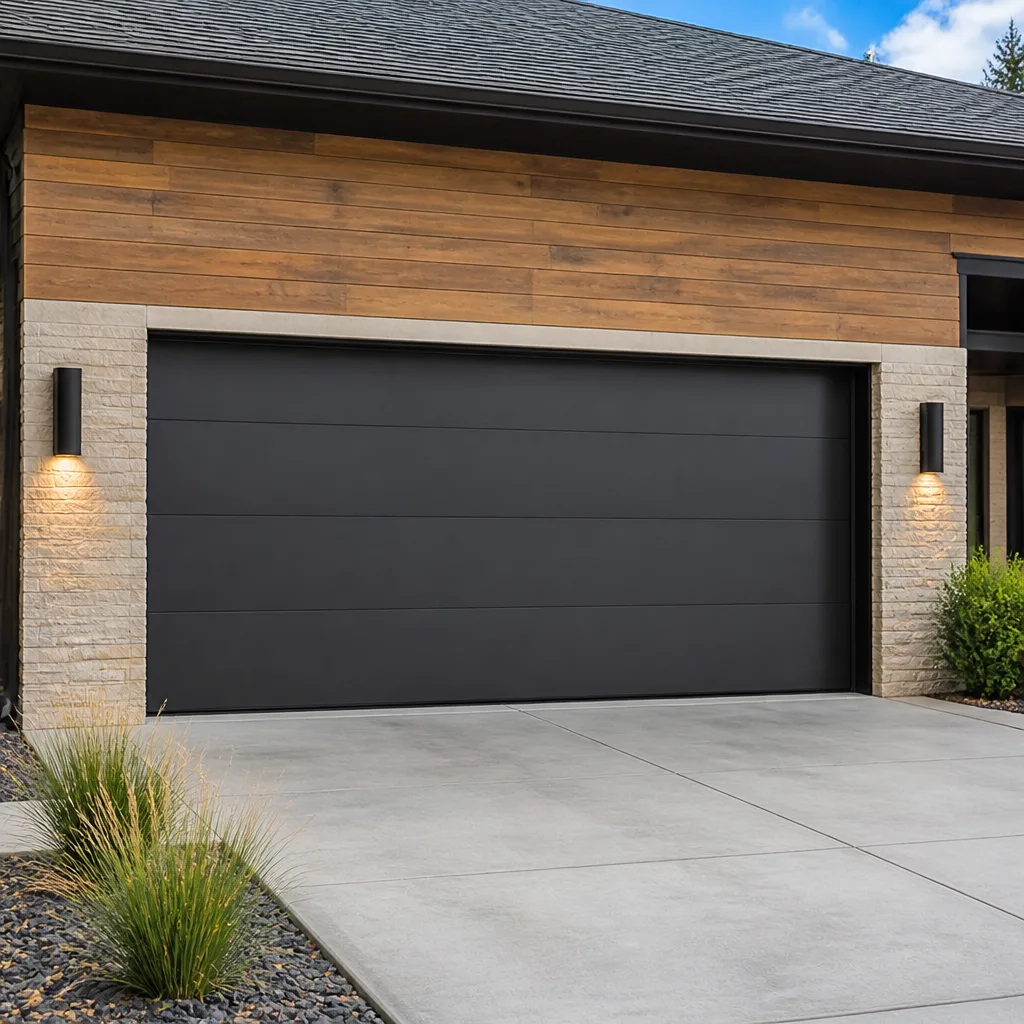 Modern flush
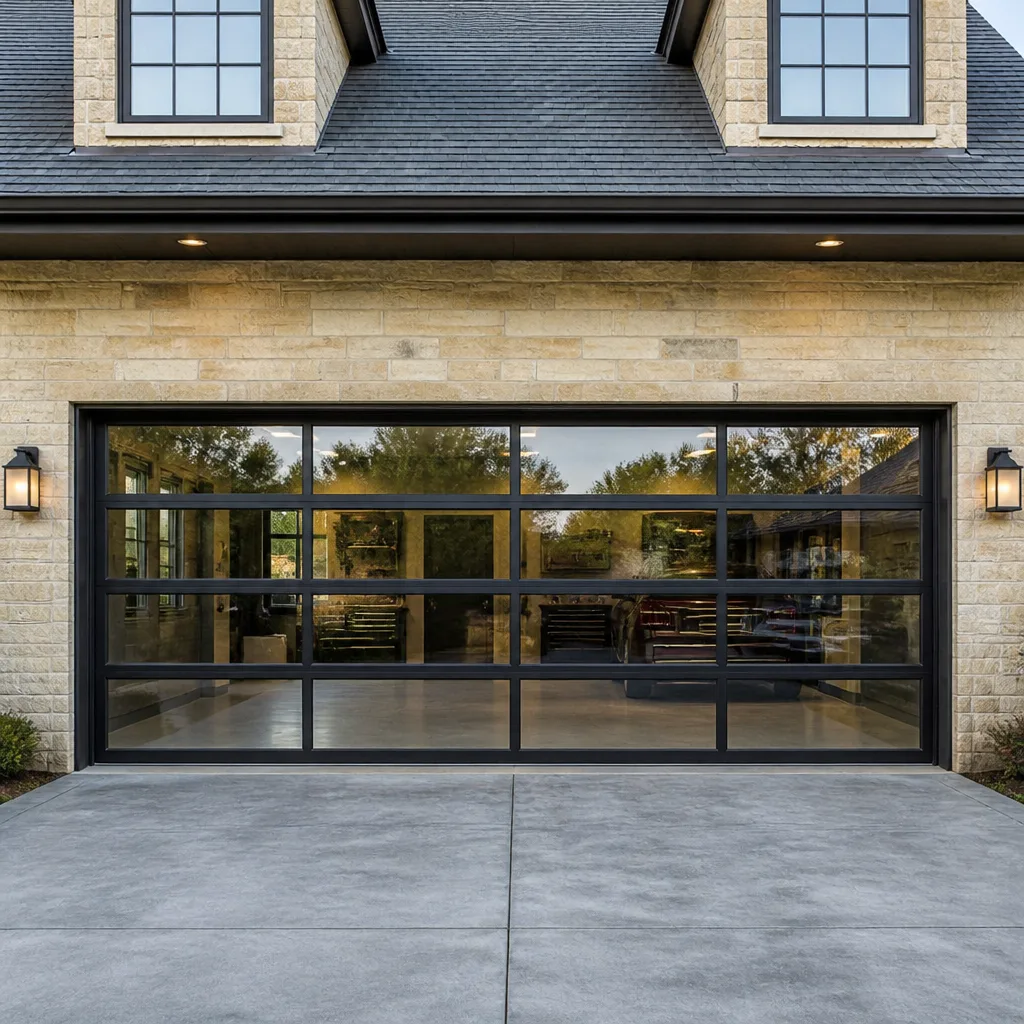 Full-view glass
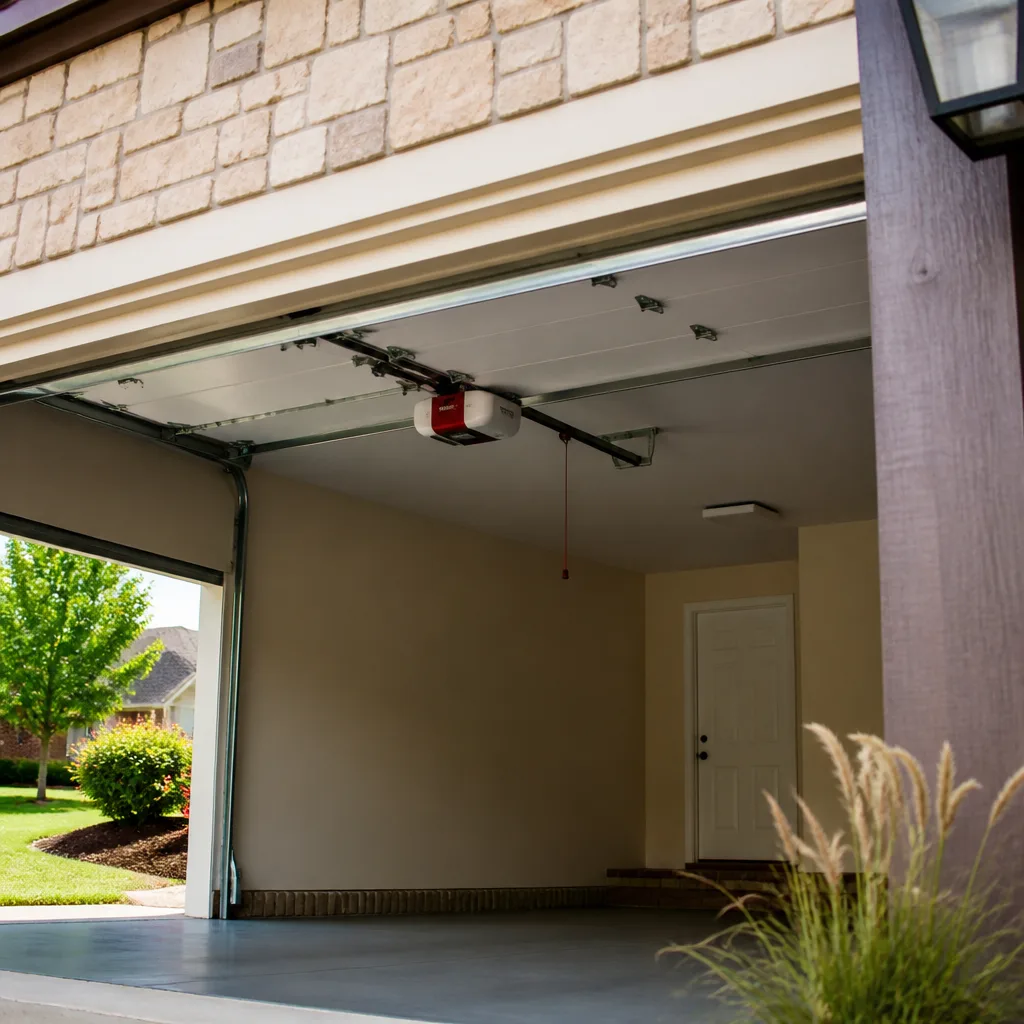 LiftMaster openers
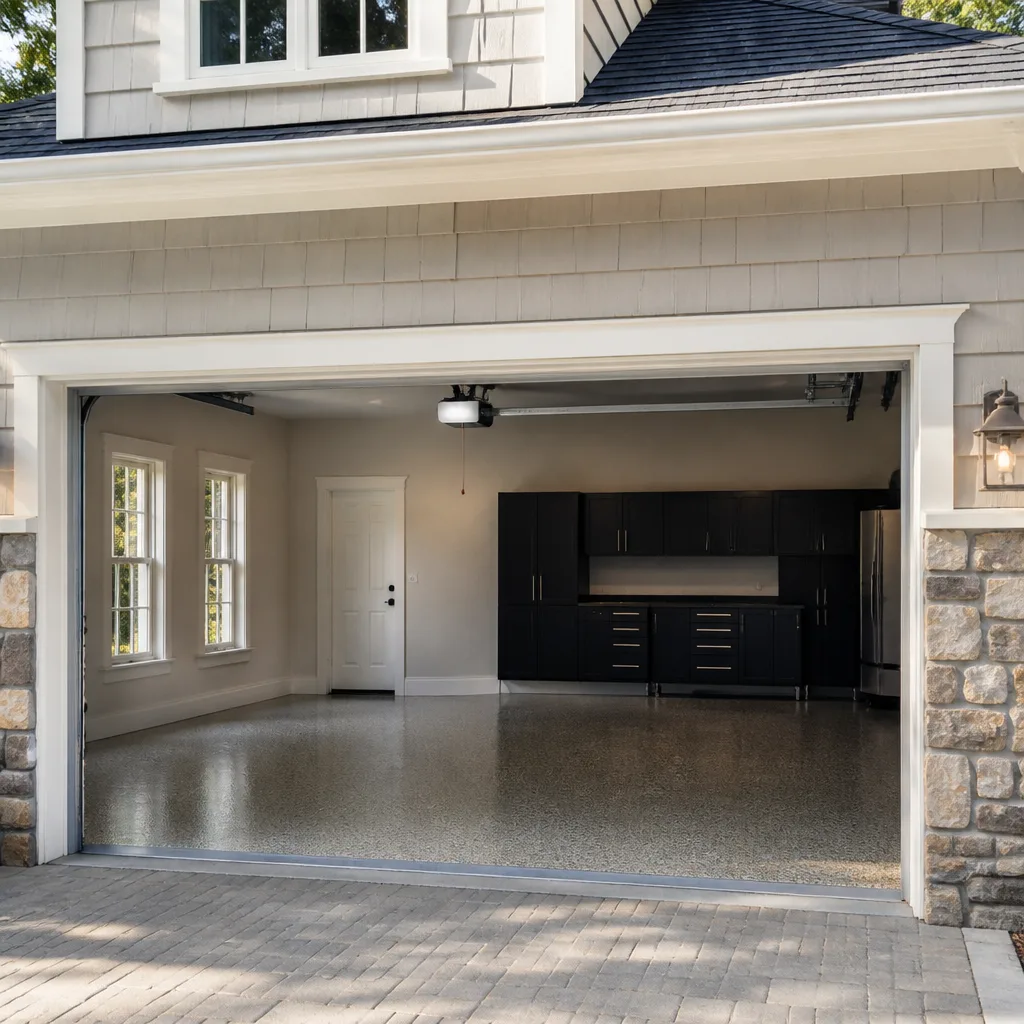 Chamberlain openers
Full 25-point door and opener safety check with every visit - springs, cables, rollers, tracks, and your LiftMaster or Chamberlain opener included
You get a price before we start. It does not change when the pro arrives.
Get your free estimateGarage Door Emergency Preparedness Guide for Huntsville Homes
Most homeowners here treat the garage door as a convenience, something that opens when you press a button and closes when you press it again. That framing hides a harder truth: the door is the largest moving surface on the house, and in a high-wind event it’s usually the first thing to give. When a garage door fails, the pressure doesn’t stop at the garage. It finds the interior. This guide walks through what a Huntsville homeowner can actually do before storm season, during an outage, and in the hours after a door is damaged: wind ratings, manual release, retrofit versus replacement, safety sequence, insurance documentation, and how to line up a contractor before you need one.
Quick Answer
A garage door is a critical safety system in Huntsville, and preparedness means three things: knowing whether your door meets current wind-load requirements, knowing how to operate the manual release during a power outage, and having a service contact lined up before a storm hits. A door that’s adequately braced and correctly rated holds pressure far better than an older unbraced door, and small preparation steps reduce the chance of interior damage.
Styles & brands we work with
- Raised-panel steel
- Carriage house
- Modern flush
- Full-view glass
- LiftMaster openers
- Chamberlain openers
Table of Contents
- Why the Garage Door Is the Weak Link in a Storm
- Wind Load Ratings and Huntsville Building Codes
- Manual Release: Operating Your Door Without Power
- Wind Brace Retrofit vs. Full Door Replacement
- What to Do When a Door Is Damaged in a Storm
- Choosing a Huntsville Contractor Before You Need One
- Pre-Season Maintenance Checklist
- Opener and Controls: The Electronic Side of Preparedness
Why the Garage Door Is the Weak Link in a Storm
A garage door is a large, relatively light panel suspended across a wide opening. When wind pushes against it, the load transfers through the panels to the track, the hinges, the springs, and the framing around the opening. An older, unbraced door can flex enough to pop out of its track or bend at the center. When that happens, the garage is no longer a sealed room, and the pressure differential pulls on interior walls, ceilings and the door between the garage and the house.
This matters in Huntsville specifically. The city sits in a corridor that sees a meaningful number of severe thunderstorm and tornado warnings through the spring and into the fall. We’ve seen how a garage door that wasn’t rated for the load behaves in those conditions, and the pattern repeats: center panel flex, track distortion, sometimes a full loss of the door. In our experience, unbraced doors on older homes are the most common failure point we diagnose.
The practical takeaway is that the door is not decorative. Treat it the way you’d treat a roof or a window rated for a design wind speed. If you don’t know what your door is rated for, that’s the first thing to establish.
Wind Load Ratings and Huntsville Building Codes
Wind load is expressed as a design pressure, and how your door is rated depends on the building code in effect when your home was built and the design wind speed assigned to your area. Huntsville building permits for new home construction and for door replacement generally require the door to be rated for the wind load at that opening, and the rating should be documented on the door’s label or specification sheet. Different design wind speeds apply to different zones across the region, so a door that was correct for one neighborhood isn’t automatically correct two streets over.
Older homes in the city are a different story. A door installed decades ago may have no documented wind rating at all, and adding a rating after the fact usually means adding bracing or replacing the door.
Checking your rating is straightforward:
- Look for a label or sticker on the inside of the door panel or on the track. Many manufacturers print the design pressure rating there.
- Find the original door specification or the home’s permit records. Both may be available from your builder, the door manufacturer, or the city’s building department.
- Compare the rating to the design wind speed for your address. If you aren’t sure what that is, ask the city’s building department to confirm before you make any decision about bracing or replacement.
If your door has no rating, treat it as unrated. That doesn’t automatically mean it must be replaced, but it does mean the door needs a professional assessment. A garage door repair visit can tell you whether the existing panels, tracks and hardware can support a rated retrofit or whether a new door is the honest answer.
Manual Release: Operating Your Door Without Power
When the power goes out, the opener stops engaging, and the door must be operated by hand. Every residential opener has a manual release, usually a red cord hanging from the carriage, and pulling it disconnects the door from the opener so it can be lifted by hand. The mistake people make is pulling the cord while the door is up, releasing it under spring tension, or trying to lift a heavy door alone after the spring has already failed. Any of these can cause the door to slam, trap someone inside or outside, or injure the person operating it.
Here’s the sequence that’s safe:
- Before any storm season, locate the manual release and test it while the power is on and someone is standing clear.
- Make sure the door is fully closed before disconnecting the opener. Releasing a raised door can drop it.
- Lift the door slowly and evenly with both hands, and set it down deliberately. Never let it come down on its own.
- Once power returns, reconnect the carriage and cycle the door once to confirm it re-engages before walking away.
If a door won’t lift by hand after you pull the release, stop. That usually means a spring has failed, and springs are under extreme tension. Do not attempt to adjust or replace a spring yourself: they can cause serious injury. Call a trained professional. If you suspect the opener itself is the problem, a dedicated garage door opener repair call can diagnose it properly rather than leaving you guessing.
Wind Brace Retrofit vs. Full Door Replacement
A retrofit adds bracing to the existing door – typically horizontal struts or reinforcement across the panels – so it can handle higher design pressure without the panels flexing out of the track. A replacement installs a new door manufactured with the required wind rating built in. Which one applies depends on the door you have.
A retrofit usually makes sense when the door is structurally sound, the panels are in good condition, and the manufacturer supports adding a rated brace to that model. It’s often the lower-cost path, and it can be done without changing the appearance of the house. It does not make sense on a door that’s already failing – warped panels, rusted hinges, distorted tracks – because bracing won’t fix the underlying weakness.
A replacement usually makes sense when the door has no rating and the manufacturer doesn’t offer a rated retrofit; when the door has damage that can’t be reliably repaired; or when the homeowner wants to upgrade insulation and appearance at the same time. Doors from manufacturers like Clopay, Amarr and Wayne Dalton are commonly installed with rated options, and a replacement is a good time to specify exactly what you need for the design wind speed at your address.
Either way, ask for a written statement of the rated design pressure the door will meet after the work, so you have documentation. A wind-rated garage door has to be installed correctly to perform – one missing anchor, one wrong hinge, and the rating is compromised.
What to Do When a Door Is Damaged in a Storm
Storm-damaged doors are dangerous in a way that’s easy to underestimate. A door that’s come off its track, bent, or lost a spring can move unpredictably. Before you touch anything, work through this sequence:
- Keep people clear. Move children and pets away from the garage and don’t park under or beside the door.
- Do not try to operate the door with the opener. Cycling a damaged door can drag it further off the track or bring it down.
- Photograph everything before you move it, if you can do so at a distance. Photos of the panel, track, hinges, springs and the surrounding opening help your insurer.
- Secure the opening without touching the door – for example, by restricting access to the garage – until a technician assesses it.
- Call your insurer and a garage door specialist. Get the damage documented and get a professional assessment before any repair approval.
- Don’t discard damaged panels. Insurers may want to see them.
A door that’s clearly off its track, has bent hardware, or has lost a spring should not be operated. Springs and cables are under high tension, and a door in that condition can fail suddenly. That’s a job for a trained professional, not a weekend project. If your door is in this state, call and we’ll get a technician out to assess it. A repair visit in Huntsville can identify whether the door is safely repairable or needs to come down.
Choosing a Huntsville Contractor Before You Need One
The worst time to evaluate a contractor is the day after a storm, when everyone’s phone is ringing. Line up a relationship early. Here’s what to look for:
- Specialization. A contractor who does garage doors as a specialty is more likely to know wind-rated equipment, opener systems and brand-specific parts than a general handyman who also hangs doors.
- Brand competence. If you have a Craftsman or LiftMaster opener, or a door from a manufacturer like Raynor, confirm the contractor works on that system. Brand-matched work reduces mismatched parts and repeat visits.
- Response planning. Ask what their response looks like after a storm. A contractor who can tell you what to expect is better prepared than one who can’t.
- Licensing and insurance. Ask for documentation before work starts.
- Written estimates. Get the scope and price agreed in writing before any repair or replacement begins.
A good contractor will tell you when a repair makes sense and when it doesn’t. At Hawthorne Garage Door Repair we work on the major brands – LiftMaster, Chamberlain, Genie, Clopay, Amarr, Wayne Dalton, Craftsman and Raynor – so we can tell you what your system needs rather than what’s convenient. We answer 24/7 and dispatch fast from 7am to 7pm, Sunday through Friday. If your door fails on a Saturday, call and we’ll book you for Sunday. Our technicians have up to 12 years of experience. Call (855) 632-2899 to set up a pre-storm assessment for your Huntsville home.
See the difference
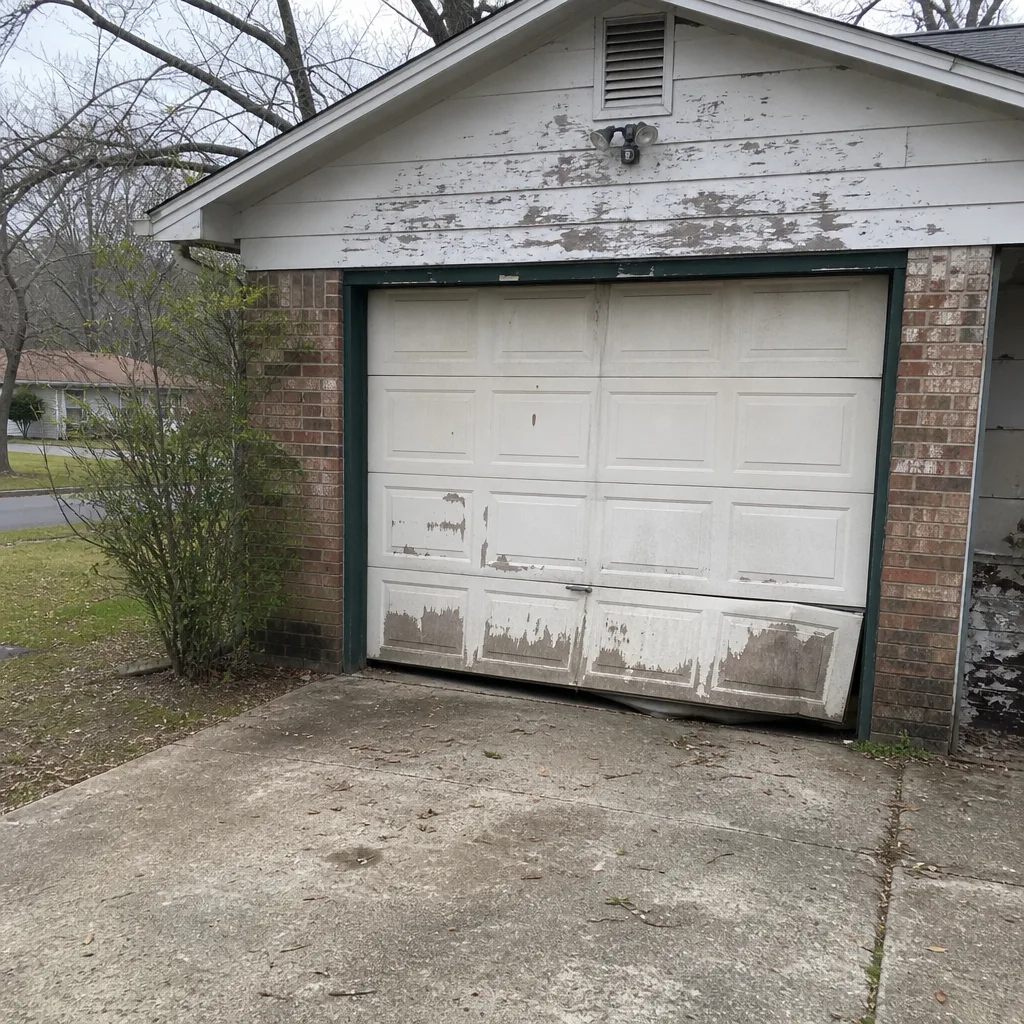 Before
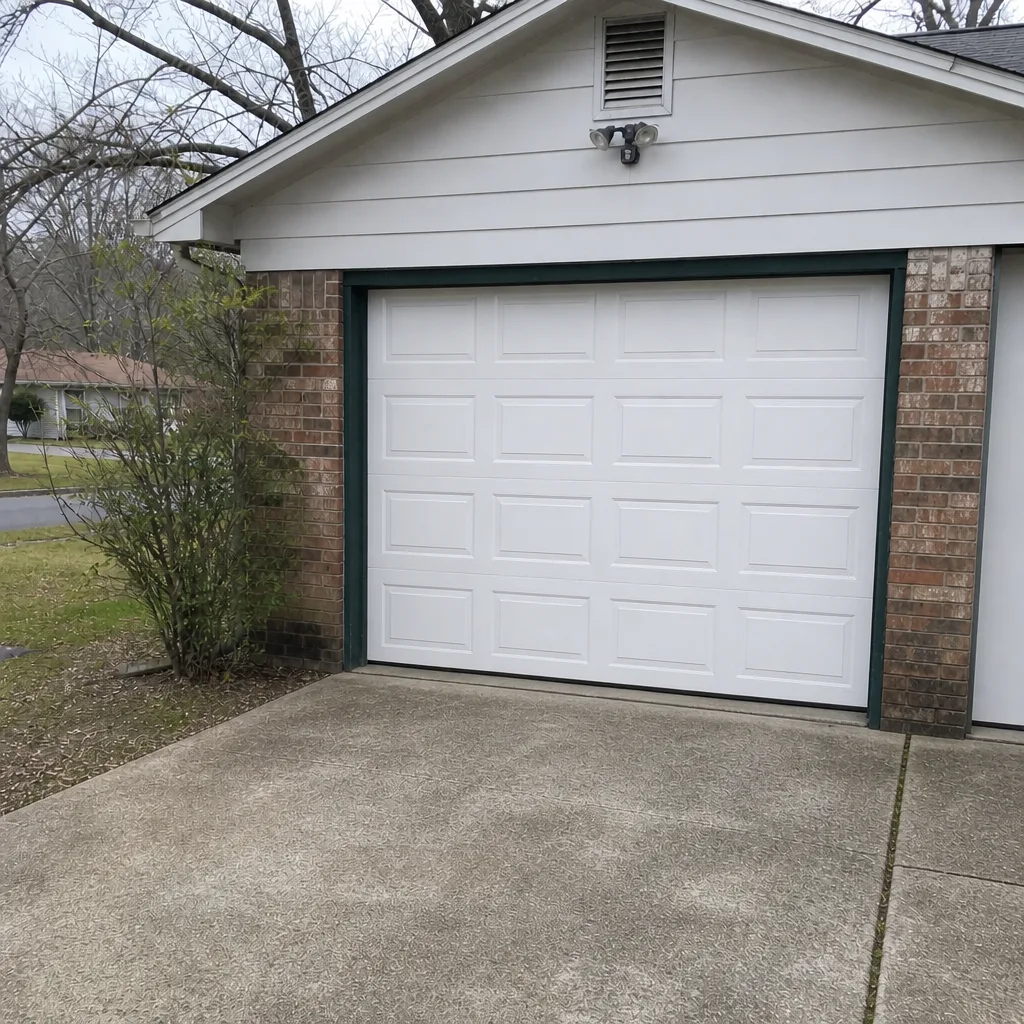 After
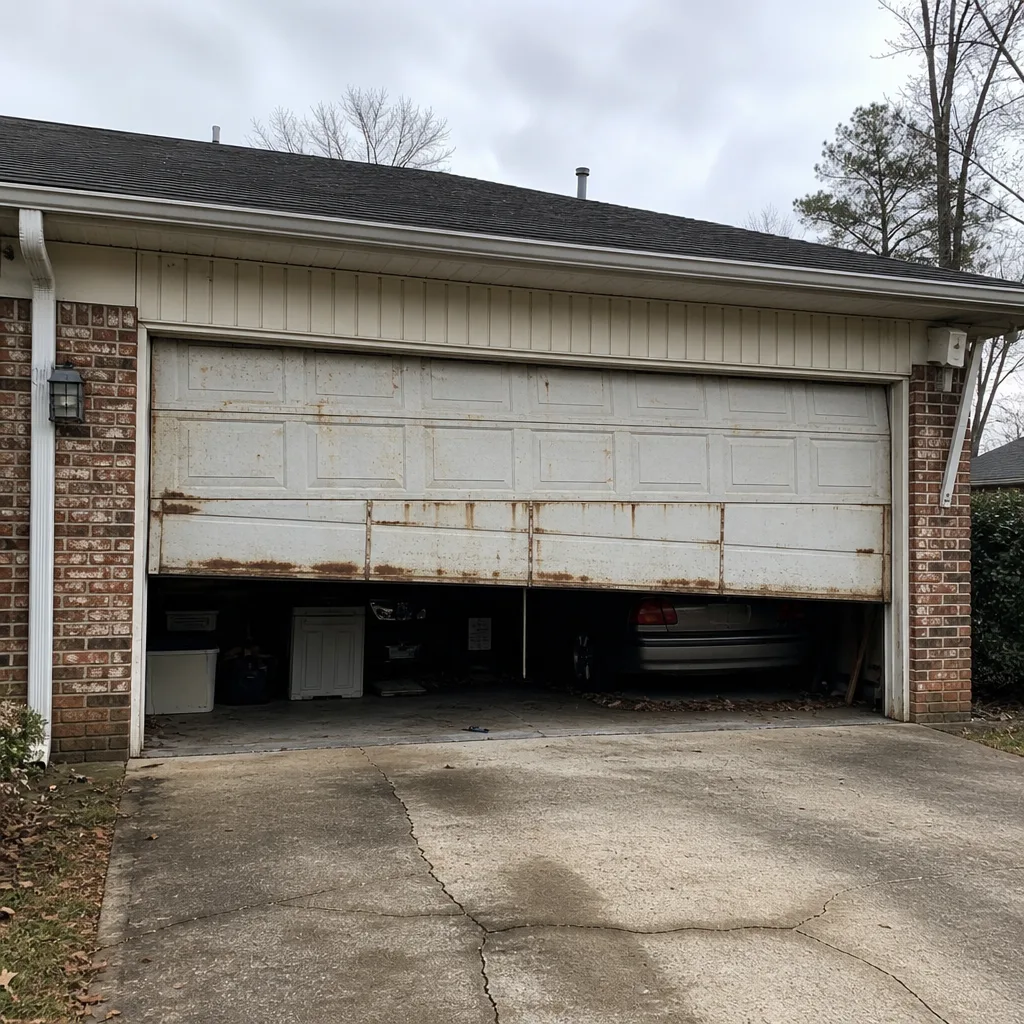 Before
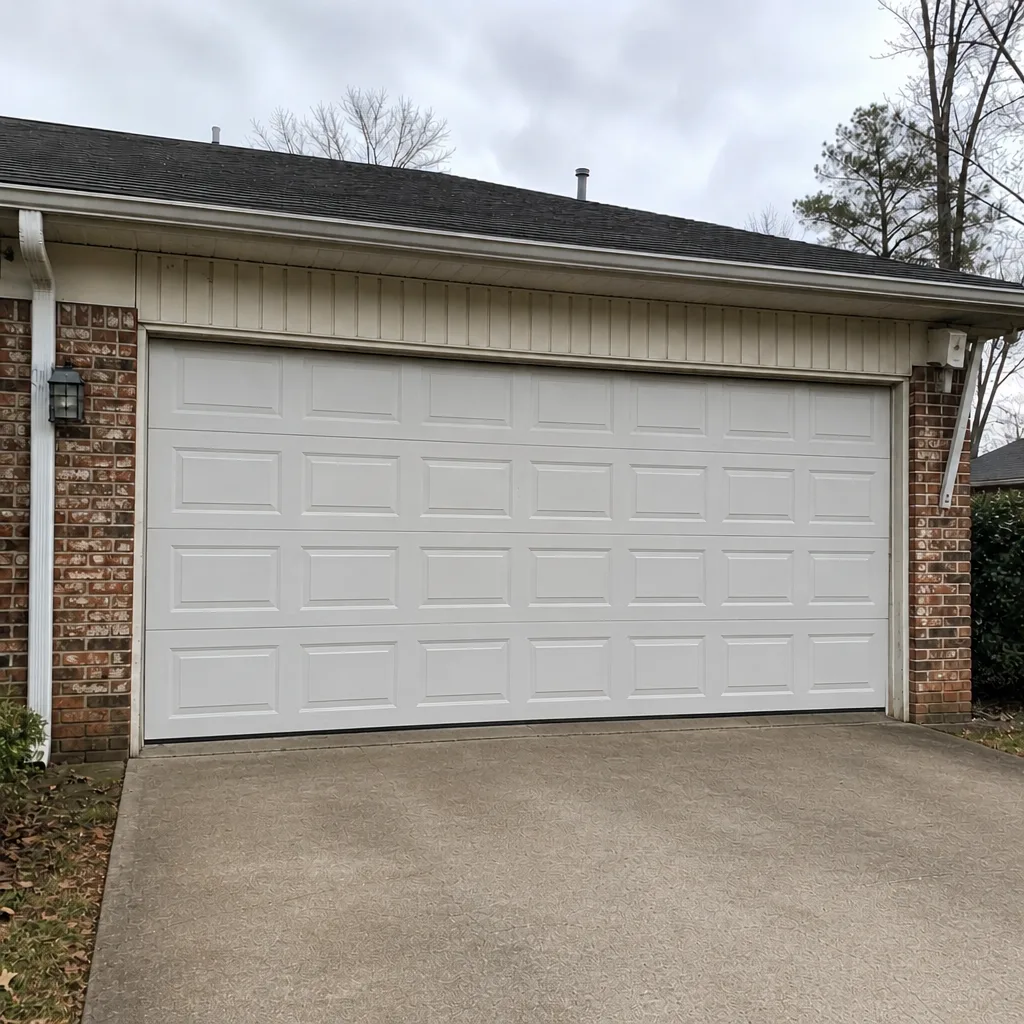 After
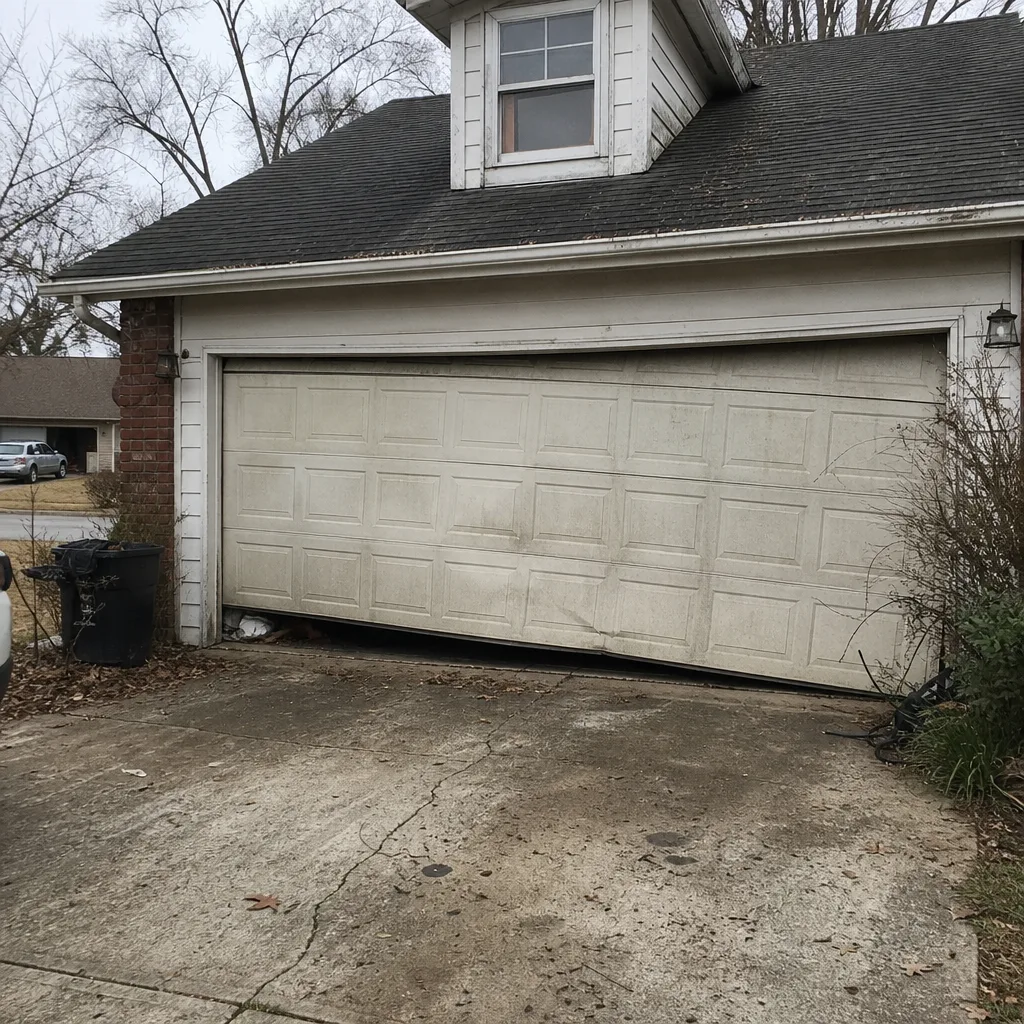 Before
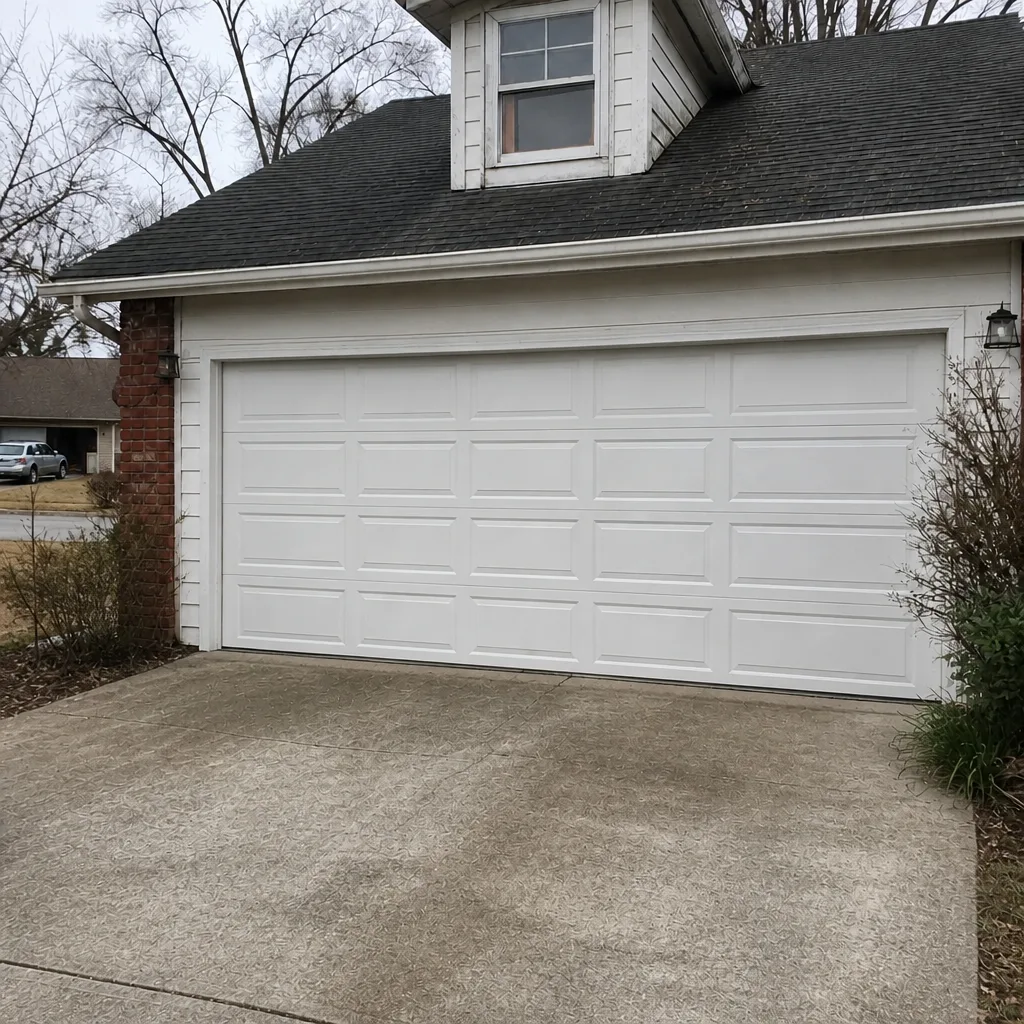 After
Pre-Season Maintenance Checklist
Storm preparedness is mostly maintenance done in calm weather. Here’s what to check each spring, and again before your season gets active:
- Test the manual release with the door closed and someone standing clear. Make sure it re-engages cleanly afterward.
- Look at the springs. Rust streaks, gaps in the coil, or a door that lifts with unusual resistance suggest spring wear. Don’t touch them – have them assessed.
- Inspect the panels. Any crack, dent or bend at the center of the door is a point where wind can start the failure.
- Check the hinges and rollers. Loose screws, bent hinges, or rollers with flat spots mean the door isn’t tracking cleanly.
- Confirm your rating. If you don’t know your door’s rated design pressure, find out before you need it.
- Test the safety reverse. Place an object in the door’s path and confirm the door reverses. This matters year-round, not just in storms.
- Review your opener’s battery backup if it has one, and test the keypad and remotes.
We see doors every week in Huntsville that would have failed in a moderate wind event because one hinge had worked loose months earlier. Catching those early is the whole game.
Opener and Controls: The Electronic Side of Preparedness
An opener has a diagnosis, not just a symptom. When a door won’t open after a storm, the problem is sometimes the door and sometimes the opener – and the two need different service. A door that hums but doesn’t move is often an opener issue. A door that moves unevenly or jerks is usually a door issue. A door that won’t respond at all may be the opener, the safety sensors, the remote, or the wall control.
Before storm season, check the basics on your opener:
- Test the wall control and a remote. Confirm both work.
- Check the safety sensors at the base of the track. Clean them and confirm the indicator light is steady.
- If your opener has a battery backup, test it and replace the battery on the manufacturer’s schedule.
- Write down the model number of your opener and your door manufacturer. If you need service after a storm, that information makes diagnosis faster.
If the opener is failing, a dedicated opener repair visit is the right call. Most openers aren’t built to be repaired by trial and error, and a technician who knows the model can save you time and money. If your opener is past its useful life, replacement is sometimes the more sensible choice – and we’ll tell you which one makes sense for your situation, rather than steering you toward the bigger job.
Common Mistakes to Avoid
- Pulling the manual release with the door already up. The door will come down hard. Always release with the door fully closed.
- Trying to repair a damaged door yourself. Springs, cables and tracks under tension can cause serious injury. Insurance may also decline a claim if damage is worsened by DIY work.
- Ignoring an unrated door. If your door has no wind rating, it’s untested against the design wind speed for your address. Treat that as a known issue and get it assessed.
- Skipping the safety reverse check. It’s the most overlooked test on the whole system, and it matters in everyday use, not just storms.
- Calling around after the storm instead of before. Contractors are busy when the weather clears. Establishing a relationship in advance makes response faster.
- Assuming a general handyman can handle wind bracing. A rated retrofit requires manufacturer-compatible parts and correct installation. Getting it wrong leaves you with the appearance of a fix and none of the strength.
- Throwing out damaged panels before your insurer sees them. Documentation matters for the claim.
When to Call a Professional
Call a specialist when: your door has come off its track or is visibly bent; a spring has failed or shows signs of rust; the door won’t lift by hand after the manual release is used; you don’t know whether your door has a wind rating; your door has a rating but you need it confirmed against the design wind speed for your address; your opener doesn’t respond, cycles unevenly, or shows error codes; or you want a pre-storm assessment before your season gets active. Hawthorne Garage Door Repair offers free estimates in Huntsville and handles repair, opener repair and installation under one name. Call (855) 632-2899. We answer 24/7. Fast dispatch from 7am to 7pm, Sunday through Friday.
Frequently Asked Questions
Look on the inside of the door panel or on the track for a label showing the design pressure rating, and check your home’s permit records or the original door specification. If neither exists, treat the door as unrated and have it assessed against the design wind speed for your address. Call the city’s building department to confirm the figure. A professional assessment will tell you whether a rated retrofit or a new door is the right path.
Follow your local emergency guidance first, and don’t stay in the garage. The door’s role in a warning is that it’s the weakest opening on the house: if you’re sheltering, shelter in a small interior room away from the garage. If you have a rated door and the garage is otherwise safe, that door stands a better chance of holding pressure than an unbraced door, but it’s still not a shelter.
Yes, using the manual release, as long as the door is in good condition and the spring hasn’t failed. Make sure the door is fully closed before you pull the release, lift slowly, and set it down deliberately. If the door won’t lift by hand, don’t force it: a failed spring is a safety hazard and should be handled by a trained technician.
Document the damage with photographs before you move anything, keep damaged panels, and get a written estimate from a garage door specialist – not a general contractor – so your insurer gets an accurate scope. Call us at (855) 632-2899 to set up that estimate. We can work with your insurer on the documentation side.
It depends on the door. If the panels are structurally sound and the manufacturer supports a rated retrofit for your model, bracing is usually the lower-cost option. If the door is unrated, damaged, or unsupported for a retrofit, replacement is usually the better answer. Ask for a written statement of the rated design pressure the finished door will meet, either way.
Establish the relationship before the storm. Look for a specialist who works on your door and opener brands, can tell you what their response looks like, and provides written estimates before work starts. Ask for licensing and insurance documentation up front. Call (855) 632-2899 to talk through what your door needs now, so you’re not starting from zero when weather hits.
If you have a door failing now, or a door you’re not sure about, call (855) 632-2899. We answer 24/7, dispatch fast from 7am to 7pm Sunday through Friday, and offer free estimates for Huntsville homeowners.
The Bottom Line
Your garage door is a safety system, not a convenience feature, and in Huntsville’s storm corridor that means preparation before the season. Get your rating confirmed. Test the manual release with the door closed. Address any bent panels, worn springs or loose hinges. Line up a specialist before you need one, and know that a damaged door should never be operated – it’s a job for a trained professional. None of this takes long, and all of it reduces the chance that a storm turns a door problem into an interior problem. See how we can help through Hawthorne Garage Door Repair.
Written by the team at Hawthorne Garage Door Repair.