
Last updated November 16, 2026
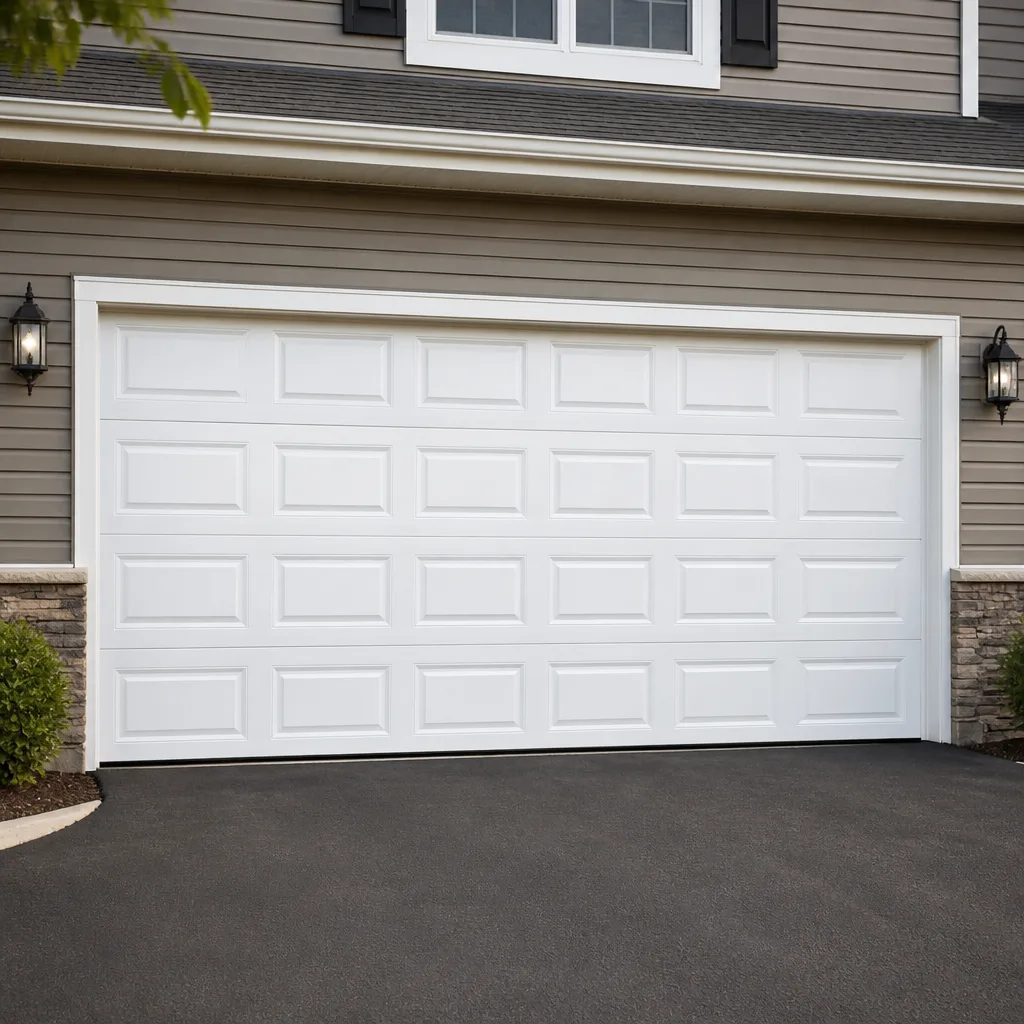 Raised-panel steel
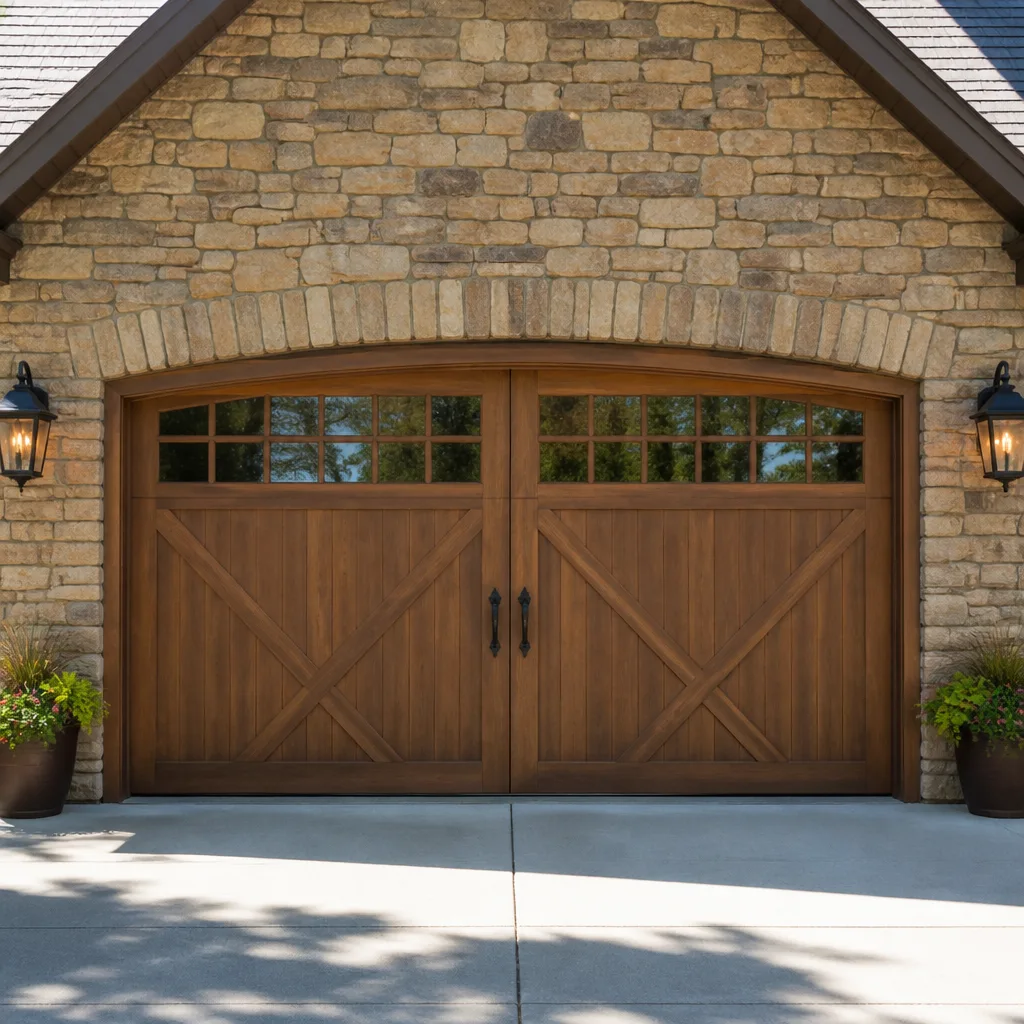 Carriage house
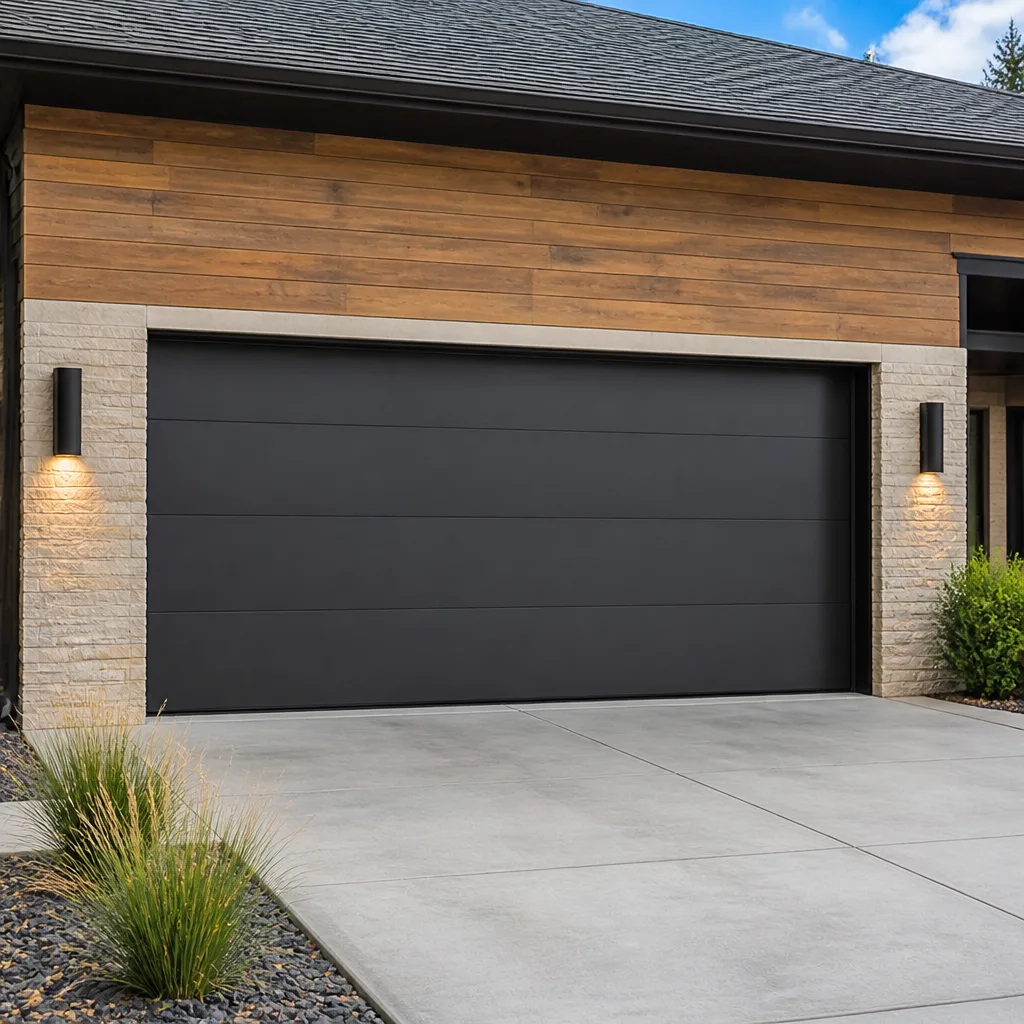 Modern flush
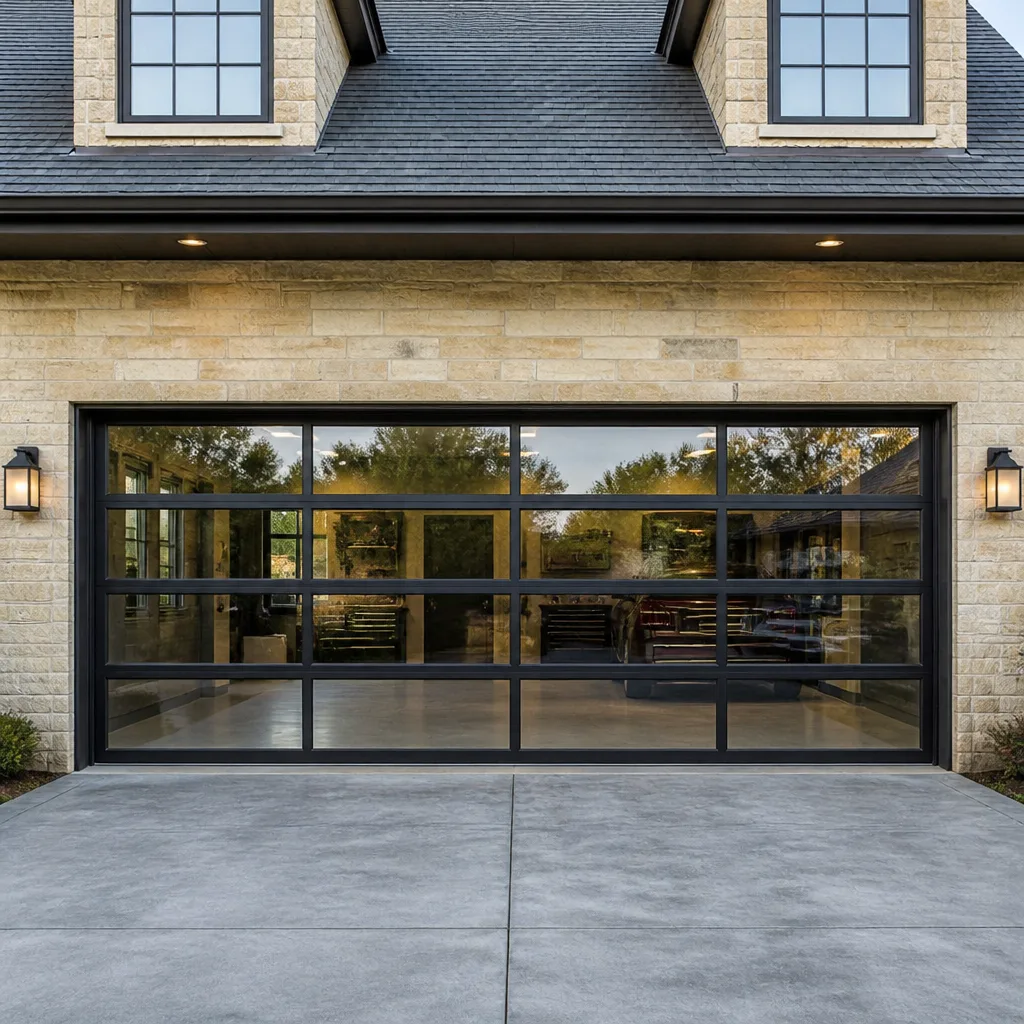 Full-view glass
 LiftMaster openers
 Chamberlain openers
Full 25-point door and opener safety check with every visit - springs, cables, rollers, tracks, and your LiftMaster or Chamberlain opener included
You get a price before we start. It does not change when the pro arrives.
Get your free estimateGarage Door Warning Signs: A Huntsville Homeowner’s Reference Guide
A garage door doesn’t snap a spring without warning. It gives you weeks of signals that most people explain away as “it’s just old” or “it sticks sometimes” – right up until it doesn’t open the morning they need to leave for work. The loud failures get all the attention in homeowner guides, but the expensive ones almost always start small: a rattle that only shows up at the halfway point, a button that needs pressing twice, a sag you’d only notice from the driveway at an angle. This guide is about catching those early signals in Huntsville, where the humidity alone works against your door year-round, so a modest repair stays a modest repair.
Quick Answer
The most reliable early warning signs of garage door trouble are unusual sounds that change during travel (grinding, popping, rattling), a door that sags or looks uneven across its panels, an opener that hesitates or needs more than one press, and weatherstripping that has gone stiff or brittle. A 30-second balance test – disconnecting the opener and lifting the door halfway by hand – reveals spring wear before a spring breaks. Catching these signs early is what separates a small repair from a full emergency call.
Styles & brands we work with
- Raised-panel steel
- Carriage house
- Modern flush
- Full-view glass
- LiftMaster openers
- Chamberlain openers
Table of Contents
- Sound-Based Diagnostics: What Your Door Is Telling You
- Visual Sag Patterns in Multi-Panel Doors
- Opener Behavior Changes as an Early Signal
- Weatherstripping Deterioration in Huntsville’s Humidity
- The 30-Second Balance Test
- What You Should Never Adjust Yourself
- Brand-Specific Behavior Worth Knowing
- When to Call a Professional
Sound-Based Diagnostics: What Your Door Is Telling You
A healthy garage door is surprisingly quiet. It hums, it glides, it thuds gently at the end of travel. When that changes, the type of sound and where in the door’s travel it happens tells you a lot about what’s wearing out. We’ve worked on enough doors across Huntsville to know that most homeowners hear the noise for weeks before they call. Here’s how to read it.
Grinding
Grinding usually means metal-on-metal contact. If it happens as the door starts to move, the rollers or hinges are likely dry or worn. If it happens throughout travel, look at the track: a bent section or debris in the channel will grate against the rollers the whole way up. In older homes around Five Points and Old Town, we often find rollers that have simply outlived their useful life and are riding metal-to-metal.
Popping
A single loud pop – often near the start or end of travel – is a classic sign of a torsion spring under stress or a cable that has slipped its drum. A popping door deserves attention right away. It’s the sound that most often precedes a spring failure, and a spring failure at the wrong moment can be dangerous.
Rattling
Rattling is usually loose hardware: hinges, brackets, or the bolts that hold the panels together. It’s the least urgent of the three, but in a multi-panel door it can gradually loosen the panels themselves, which brings us to the next section.
Where in travel the sound occurs
- First few inches: spring, cable, or bottom-bracket trouble.
- Middle of travel: track alignment, roller wear, or panel binding.
- Last few inches: opener travel limits, top-bracket hardware, or a misadjusted close limit.
Noting where the noise happens before you call makes the diagnosis faster – and it’s exactly the kind of thing our technicians listen for first.
Visual Sag Patterns in Multi-Panel Doors
Sectional doors are built to distribute load across the panels, hinges, and rollers. When one component starts to give, the sag pattern usually points straight at it. Stand in your driveway and look at the door straight on, then squat down and look at it from a low angle. You’re looking for three things.
A droopy top panel
If the top section dips in the middle, the top brackets or the torsion system are likely out of balance. This pattern often shows up in Clopay and Amarr doors whose springs are near the end of their cycle life.
Uneven gaps at the sides
If one side of the door sits lower than the other, a cable has probably stretched or slipped on one drum. That’s a cable issue, not a panel issue, and it usually gets worse fast. Don’t run the door repeatedly trying to “work it loose.”
Panels that bow outward or inward
Bowed panels usually point to a binding track or a roller that’s popped out. On Wayne Dalton doors with their distinctive panel construction, a bow often starts at a single hinge and spreads. If you can see a bow, the door is no longer running true.
Any sag pattern means the door is fighting itself. That friction accelerates wear on every other component, which is how a hinge replacement becomes a spring, cable, and roller job.
Opener Behavior Changes as an Early Signal
Your opener has a diagnosis, not just a symptom. When a door won’t open at all, everyone notices. But most openers give you subtler signals for days or weeks first. If you recognize these, you can often fix the opener before the door stops working entirely. garage door opener repair is a specialty in its own right – the electronic and mechanical systems inside an opener deserve real diagnosis, not guesswork.
Hesitation at the start
The motor hums but the door doesn’t move for a beat before catching. That delay is often a sign that the opener is fighting excess resistance – a worn roller, a tight track, or a spring that’s lost tension. The opener isn’t the problem; it’s telling you the door is.
Multiple button presses required
If you press the remote and nothing happens, then press again and it works, the issue could be a weak remote battery, an antenna problem, or a logic board that’s starting to fail. On Genie and LiftMaster openers, we often trace this to a remote that needs re-pairing or a logic board under stress.
Partial reversal
The door starts up, then reverses part way. That’s usually the safety sensors, a misadjusted travel limit, or a door that’s binding and the opener’s force setting is kicking in to stop it. This is an important one to catch early, because continuing to run a door that reverses mid-travel wears the opener’s gears faster than any other problem.
New noises from the opener housing
A grinding or whining sound coming from the opener unit itself – not the door – points at the gear assembly or the drive. Chain-drive and belt-drive units sound different when they’re failing, and brand matters here.
Weatherstripping Deterioration in Huntsville’s Humidity
Huntsville’s summers are long and humid, and the temperature swings between seasons are real. That combination is hard on the rubber and vinyl seals around a garage door. Weatherstripping that’s gone stiff, cracked, or brittle doesn’t just let in drafts – it makes the opener work harder on every single cycle, and that added strain shortens the life of the motor and the door hardware.
What to check
- Bottom seal: Run your hand along the bottom weatherstrip. If it feels hard, has visible cracks, or leaves a gap when the door is closed, it needs replacing.
- Side and top seals: Look for daylight coming through when the door is shut, or peeling sections that no longer contact the door frame.
- Framing around the opening: In older Huntsville homes, the wood frame around the door can absorb moisture and swell, which throws off the door’s travel and strains the opener.
Why it matters for the opener
A stiff bottom seal creates drag as the door closes. The opener compensates by increasing force, which wears the gears and, over time, shortens the motor’s life. Replacing worn weatherstripping is one of the least expensive maintenance steps a homeowner can take, and it directly protects the opener. In our experience, doors that get new seals every few years last noticeably longer between major repairs.
The 30-Second Balance Test
This is the single most useful check a homeowner can do. It requires no tools, takes about 30 seconds, and it reveals spring wear before the spring breaks. Here’s how it goes.
- Close the door completely. Make sure no one is in the path of the door and the opener is engaged.
- Pull the emergency release cord hanging from the opener carriage. This disconnects the door from the opener so you can move it by hand.
- Lift the door to about halfway open and let go. A properly balanced door will stay roughly where you left it.
- Watch what happens next. If the door drops on its own, the springs have lost tension and need service. If it rises on its own, the springs are over-tensioned. Either way, the door isn’t balanced, and that imbalance is exactly what wears out the opener.
- Reconnect the opener by pulling the release cord again or operating the opener once to re-engage the carriage.
If the door falls in step four, don’t try to chase it down or catch it. Let it settle and call a professional. Springs under tension are a serious hazard, and the fix is not a homeowner job. If the door passes the balance test, you’ve confirmed the springs are still holding – that’s your baseline for next time.
What You Should Never Adjust Yourself
Some maintenance is homeowner-friendly: cleaning the tracks, wiping down the rollers with a light lubricant, replacing weatherstripping, and tightening the occasional loose hinge bolt. Other work is genuinely dangerous and belongs in the hands of a trained technician. We can’t be plainer about it.
- Springs under tension. Torsion and extension springs store enormous energy. A spring that releases unexpectedly can cause serious injury.
- Cables under load. A snapping cable whips with real force. Cable work is a professional job.
- The bottom bracket and its fasteners. These are under constant tension from the cable system.
- Opener force and travel limit settings. Setting them too high removes the safety that protects people and pets.
- Electrical work inside the opener. The 120-volt side of the opener, if you’re not trained, is not the place to experiment.
A serious injury from a spring or cable can happen in an instant. We’d rather you call us than take that risk. Our technicians have up to 12 years of experience with these systems, and even we treat tensioned springs with respect.
Brand-Specific Behavior Worth Knowing
Every major brand has its own quirks. Knowing them helps you read your door’s symptoms correctly and gives you confidence that whoever you call actually knows the system. We service LiftMaster, Chamberlain, Genie, Clopay, Amarr, Wayne Dalton, Craftsman, and Raynor systems. Here are a few behaviors worth recognizing.
Clopay and Amarr doors
These doors are well built, and their panels tend to fail predictably when they do. A single droopy top panel on a Clopay or Amarr door most often comes back to a spring issue rather than a panel defect.
Wayne Dalton openers
Some Wayne Dalton opener models use a different drive configuration than a standard chain or belt opener, and their remotes and logic boards have specific pairing procedures. A hesitation or partial reversal on a Wayne Dalton opener should point you toward a brand-matched diagnosis, not a generic guess.
Genie and LiftMaster
The two most common openers we see in Huntsville homes. Both are reliable, and both give clear early signals when their gears or drive start to wear. On Genie units, listen for a change in the whine from the motor housing. On LiftMaster units, pay attention to the safety sensors – a misaligned sensor is a common cause of partial reversal, and it’s usually a quick fix.
If your system isn’t one of those two, don’t worry. We know this system across all eight major brands, so brand-matched service is standard.
When to Call a Professional
Call a professional the moment you hear popping, see a sag that wasn’t there last month, or the balance test tells you the door won’t hold. Call if the door reverses mid-travel or if the opener needs multiple presses to engage. Call if you’ve hit a spring failure, a snapped cable, or a door that’s off its track. And call if you’ve done the visual checks, replaced the weatherstripping, and something still feels wrong – a professional diagnosis is faster and cheaper than guessing. In Huntsville, our team handles all three service lines under one company, so a door that needs repair, an opener that needs diagnosis, and a replacement that needs scheduling are all one call. If you’re weighing repair against replacement, we’ll tell you which one actually makes sense.
See the difference
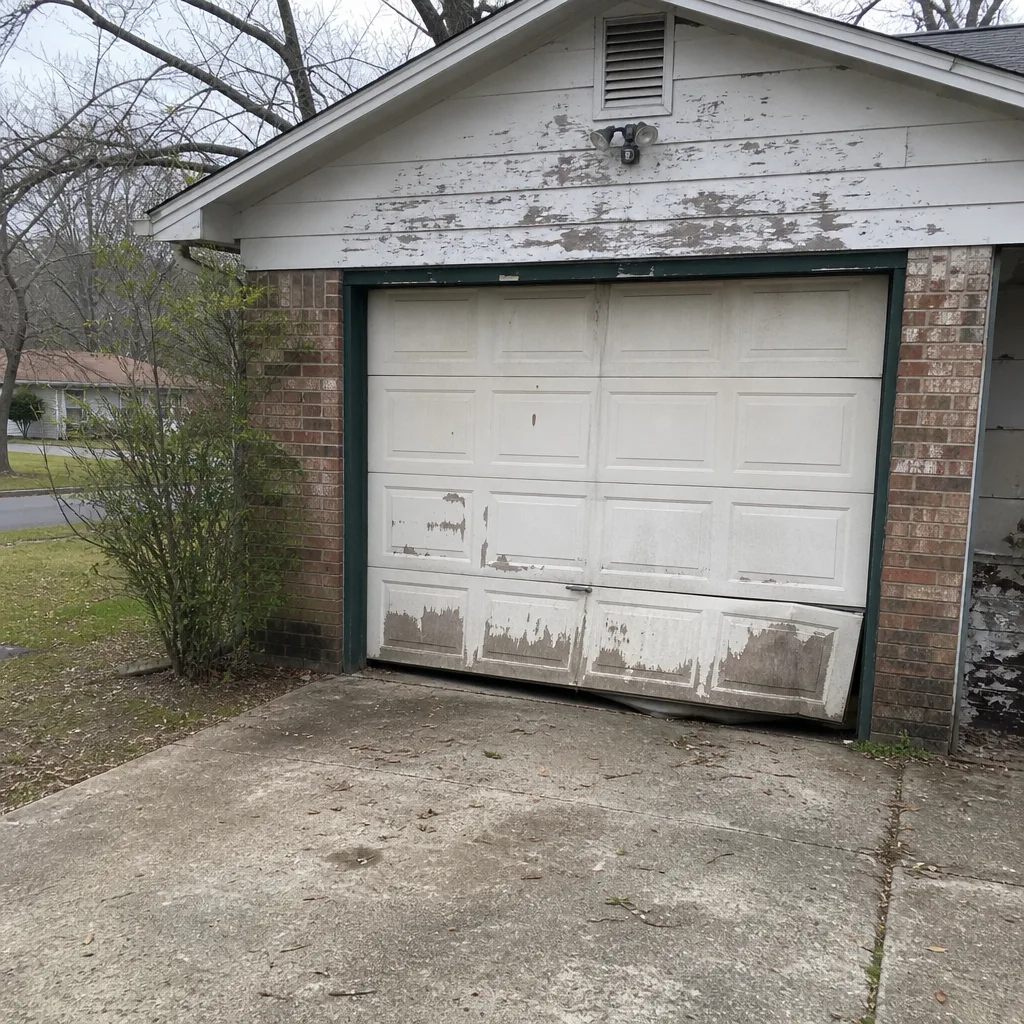 Before
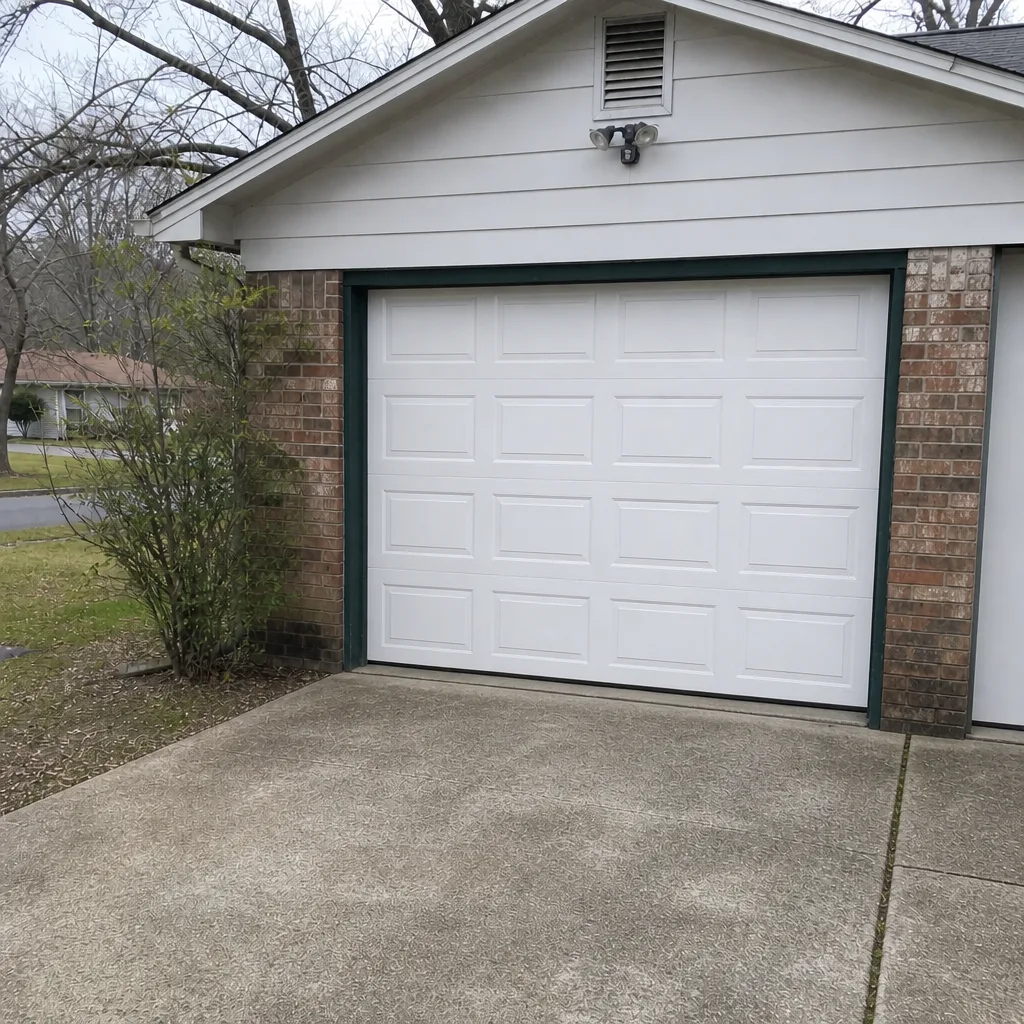 After
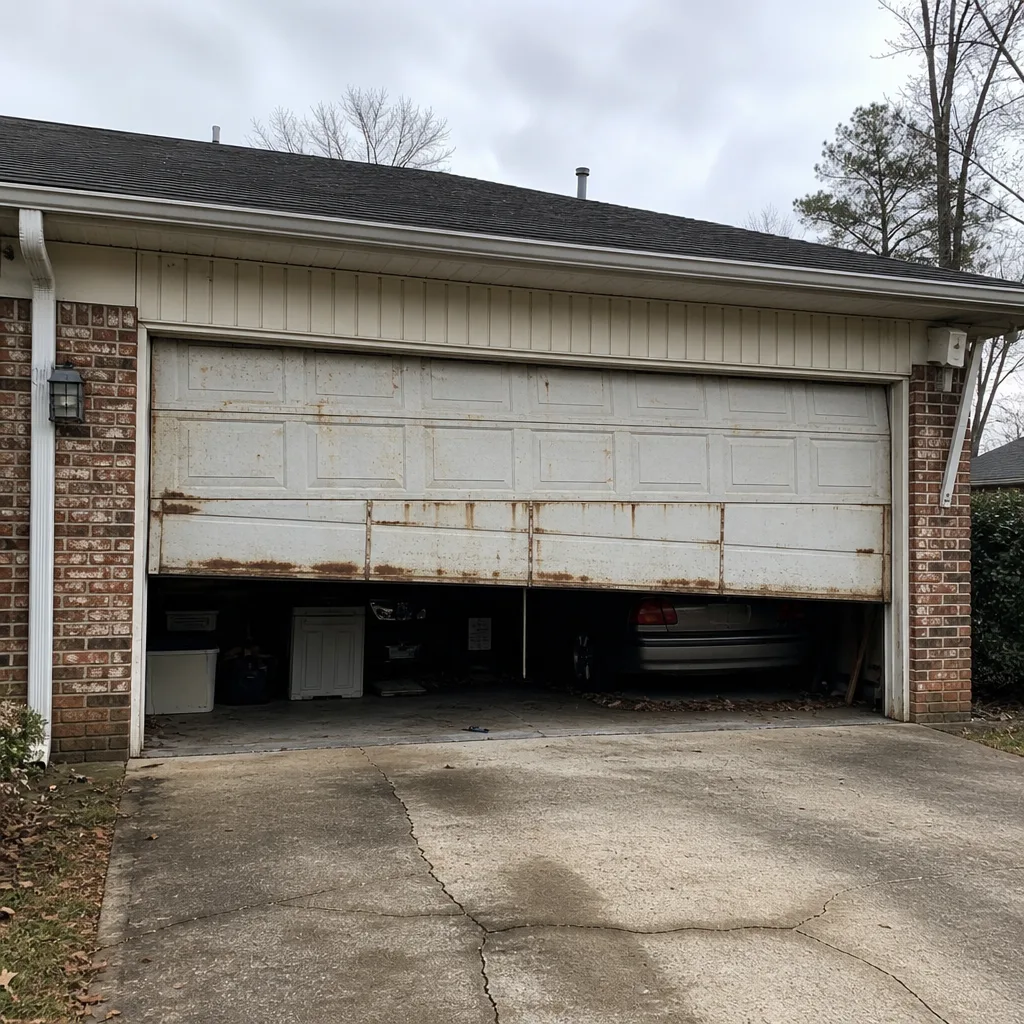 Before
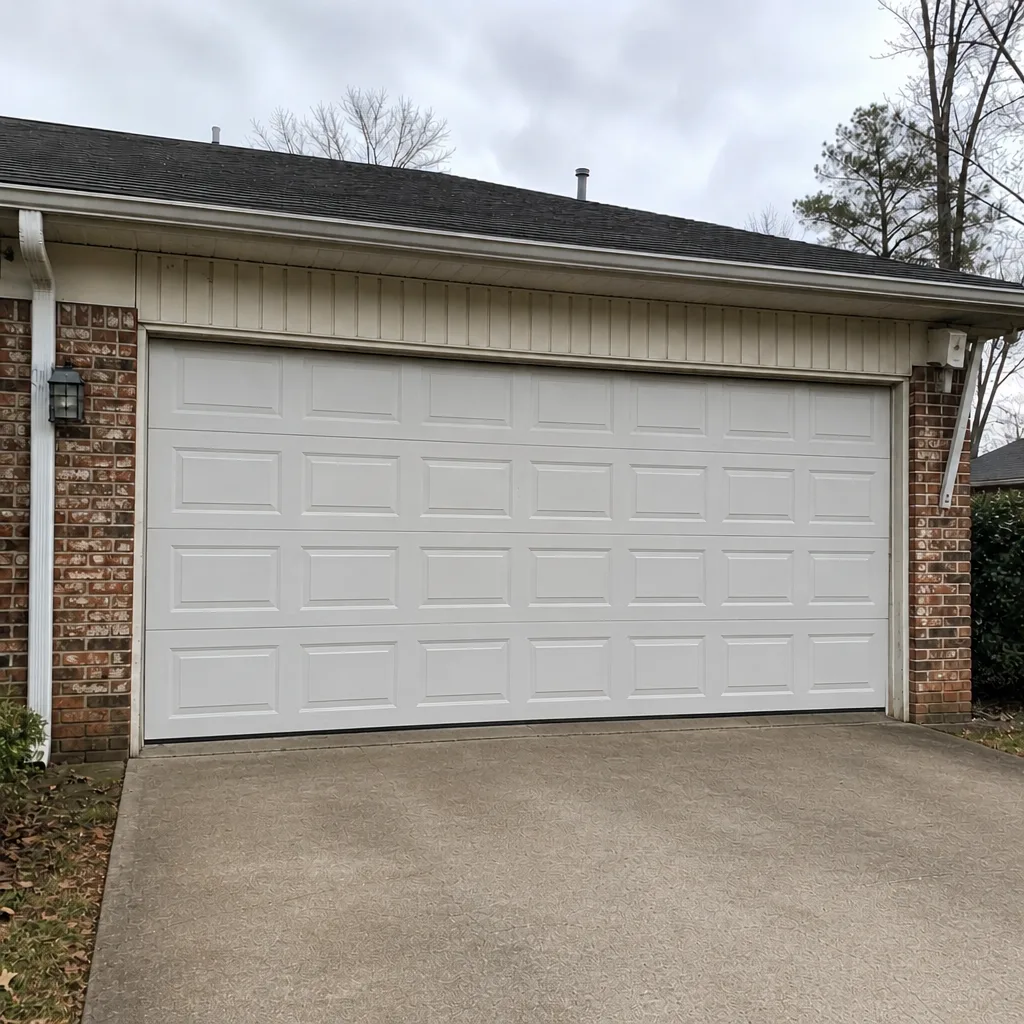 After
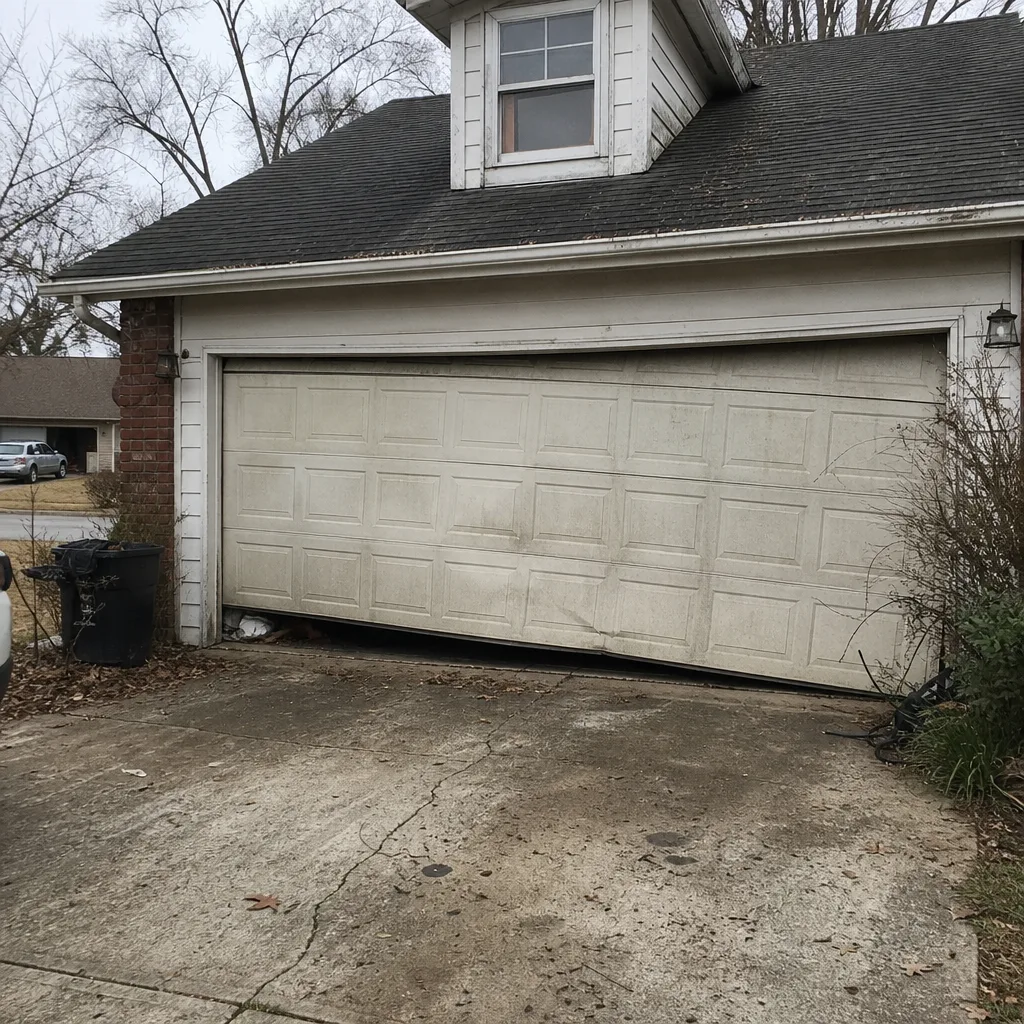 Before
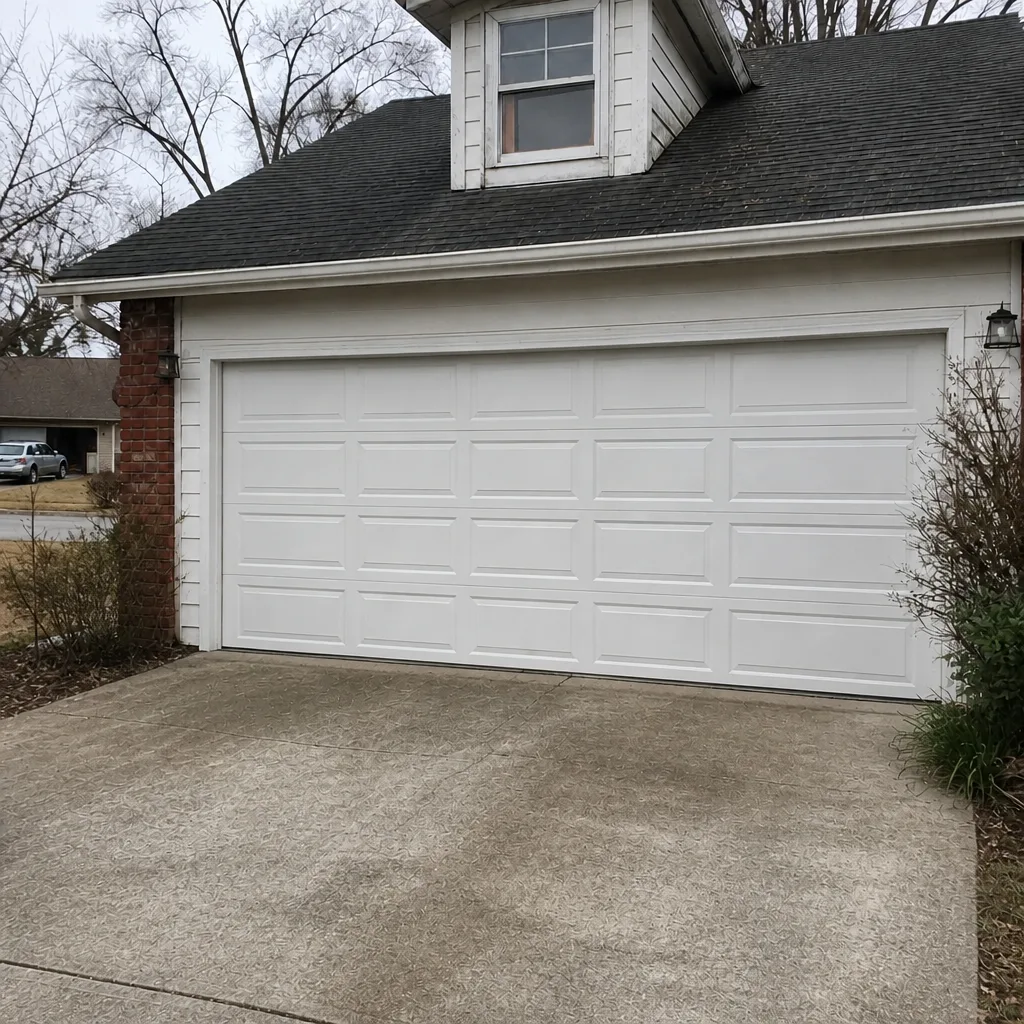 After
Common Mistakes to Avoid
- Running a door that rattles for weeks. A little rattle is the cheapest repair you’ll ever make. Ignored, it turns into a panel, hinge, or roller job. In Huntsville’s humidity, the wear accelerates faster than homeowners expect.
- Tightening springs by eye. Adjusting spring tension by feel is not a homeowner fix. The correct tension is set by weight and cycle count, and a trained technician confirms both.
- Ignoring weatherstripping. It looks cosmetic. It isn’t. Stiff seals drag on the door and overwork the opener, which is a much bigger bill.
- Skipping the balance test. It’s 30 seconds and no tools. Doing it once a season catches spring wear well before it becomes a failure.
- Cleaning the tracks with the wrong lubricant. Heavy grease attracts grit and grit grinds rollers. A light, purpose-made garage-door lubricant is all the tracks need.
- Disengaging the opener and forgetting to re-engage. A door that runs by hand for a week can drift out of balance, and the opener will fight it once you reconnect.
- Assuming a brand your opener isn’t. Parts and procedures differ by brand. A generic part on a Genie or Clopay system can cause the exact hesitation you were trying to fix.
Frequently Asked Questions
The first sign is usually a sound that wasn’t there before – a grinding, a pop, or a rattle that changes during the door’s travel. Most homeowners hear it weeks before the door stops working. That’s the window to act.
Run the balance test: disconnect the opener, lift the door halfway, and let go. If it drops, the springs have lost tension. A popping sound or a door that feels heavy on the way up are other strong signs. Call (855) 632-2899 for an exact quote – estimates are free.
No. A door with a broken spring can’t be lifted by most openers, and if it does try, the motor will strain and can fail. Don’t keep pressing the button trying to get it up. Call for repair.
Partial reversal usually means the safety sensors are misaligned, the travel limit needs adjustment, or the door is binding. It’s a common issue on Genie and LiftMaster openers and it’s usually a quick fix. Call us for a diagnosis.
Check it once a year, because Huntsville’s humidity and temperature swings break it down faster than in drier climates. Replace it when it feels hard or cracked, or when you can see daylight around the closed door. It’s one of the least expensive maintenance steps by estimate.
No. The price is set by the written estimate, and we agree on it before any work starts. Every job is quoted that way – you’ll know the number before we begin.
The Bottom Line
Garage doors are good at warning you before they fail. The sounds that change during travel, the sag you didn’t notice last month, the opener that needs two presses instead of one, the weatherstripping that’s gone stiff in Huntsville’s humidity, and the 30-second balance test – all of these are early signals you can act on. Catching them early keeps small repairs small and turns a potential emergency into a scheduled job. And if any of these checks raise a flag, or if you’d rather have a professional look, our team handles repair, opener repair, and installation across all three service lines.
We work on your brand, whether it’s LiftMaster, Chamberlain, Genie, Clopay, Amarr, Wayne Dalton, Craftsman, or Raynor, and we’ll tell you honestly whether repair or replacement actually makes sense. Hawthorne Garage Door Repair handles garage door repair throughout Huntsville, and if you just want a straight answer on what’s wrong with your door, give us a call. Call (855) 632-2899 for a free estimate. We answer 24/7. Fast dispatch from 7am to 7pm, Sunday through Friday.
Written by the team at Hawthorne Garage Door Repair.